Concrete that holds up to sand, swales and salt air.
Driveways, swale aprons and culverts, patios and lanai slabs, pool decks, stamped concrete, shed and boat pads, foundations and repairs across Palm Coast and the Flagler coast — by a local, licensed, insured crew that compacts the base, gets the water right, pulls the city permit and puts the whole price in writing first.
Licensed & insured · Registered with Palm Coast Building Services · Free on-site measurement · Written price before a truck is ordered
Concrete work for a city built on sand and drained by swales
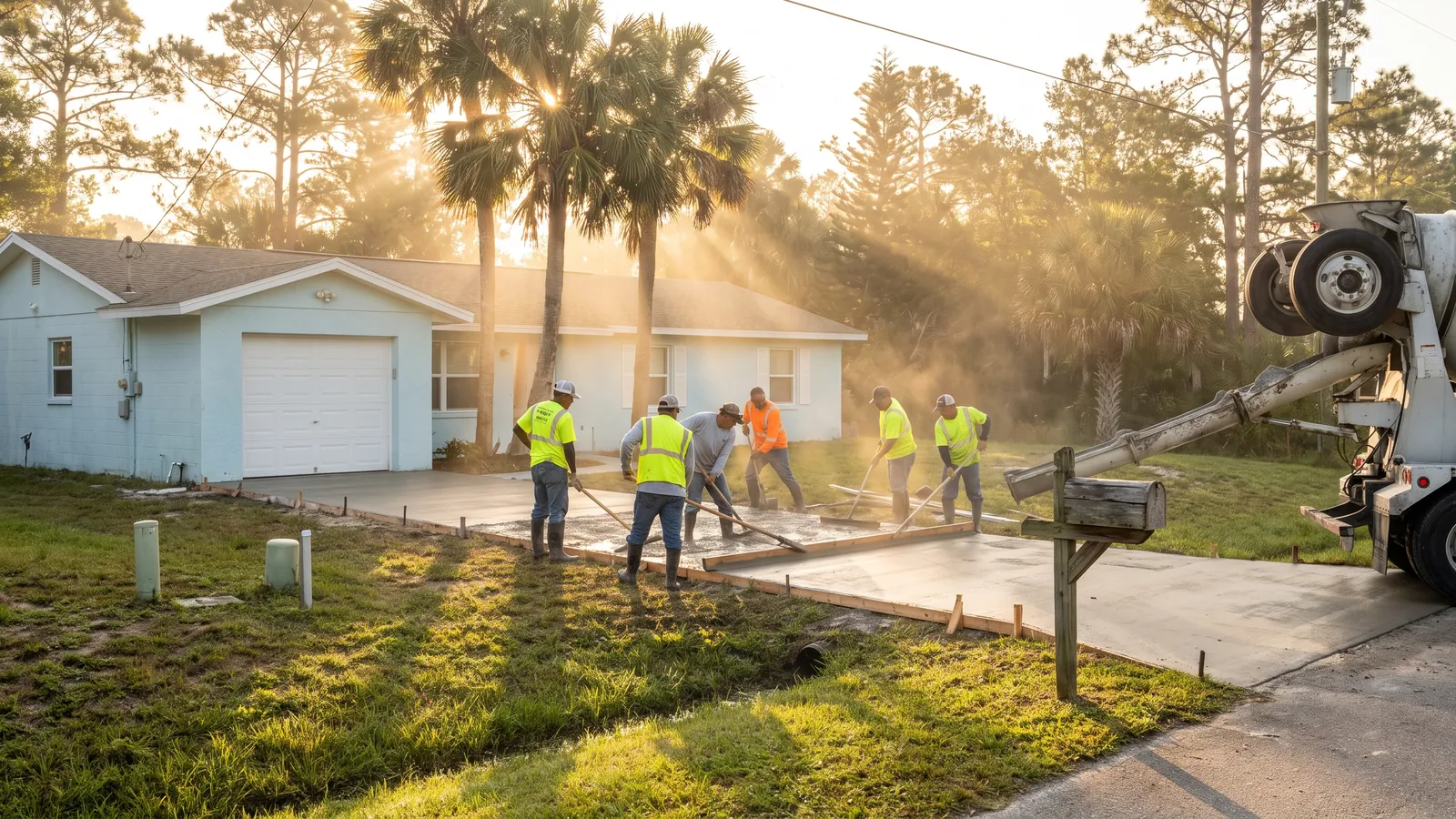
Concrete driveways
New, replacement and widening on the ITT quarter-acre lots — old slab out, base recompacted, fiber and wire, control joints where they belong.
Driveways & pricing →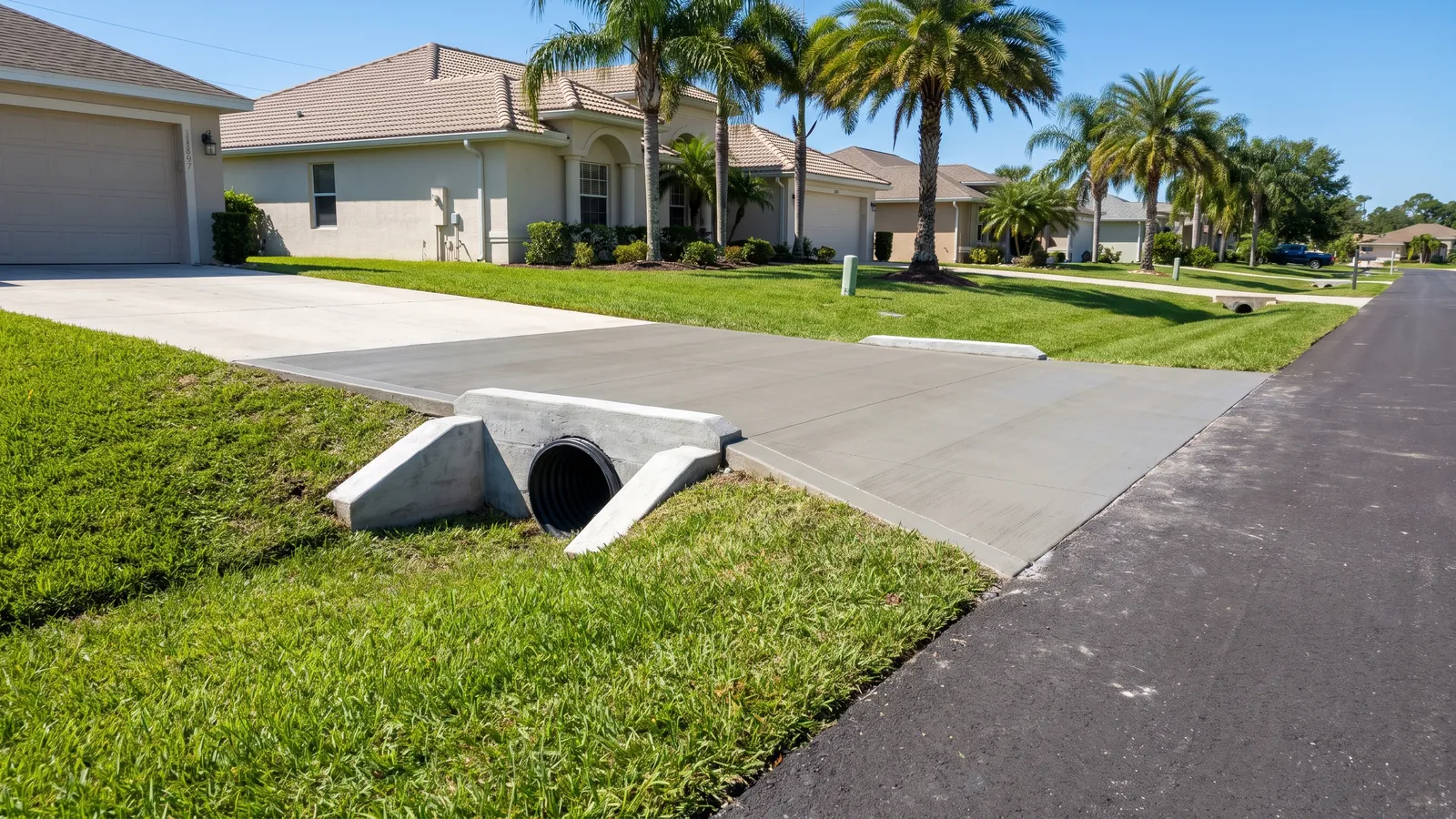
Culverts & swale aprons
The apron across the roadside swale, the culvert pipe under it and the poured mitered ends — to the city's detail, permitted and inspected.
Culverts & aprons →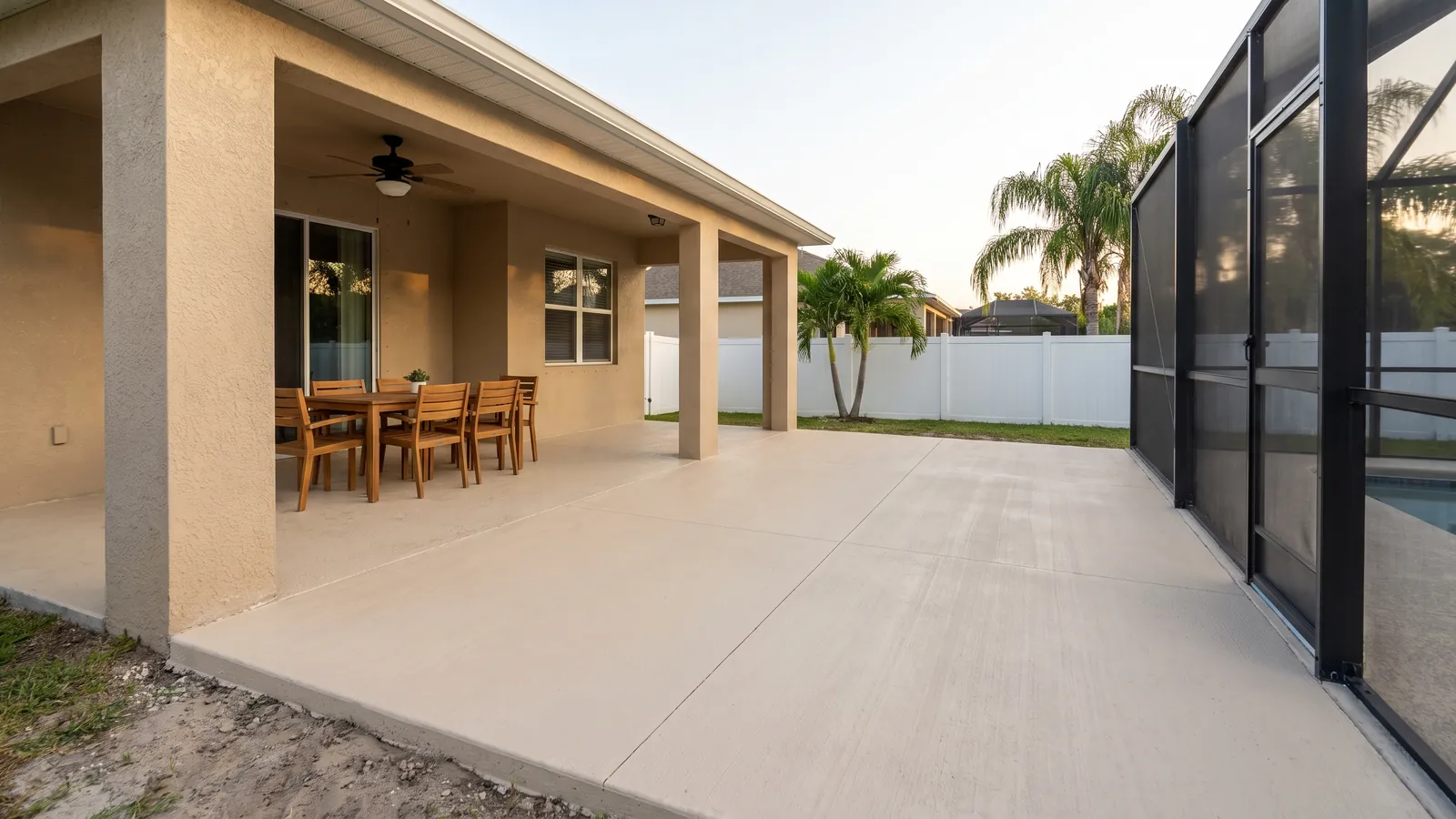
Patios & lanai slabs
Lanai extensions, screen-room slabs with column footings, summer-kitchen pads and hot-tub pads, pitched away from the house.
Patios & lanais →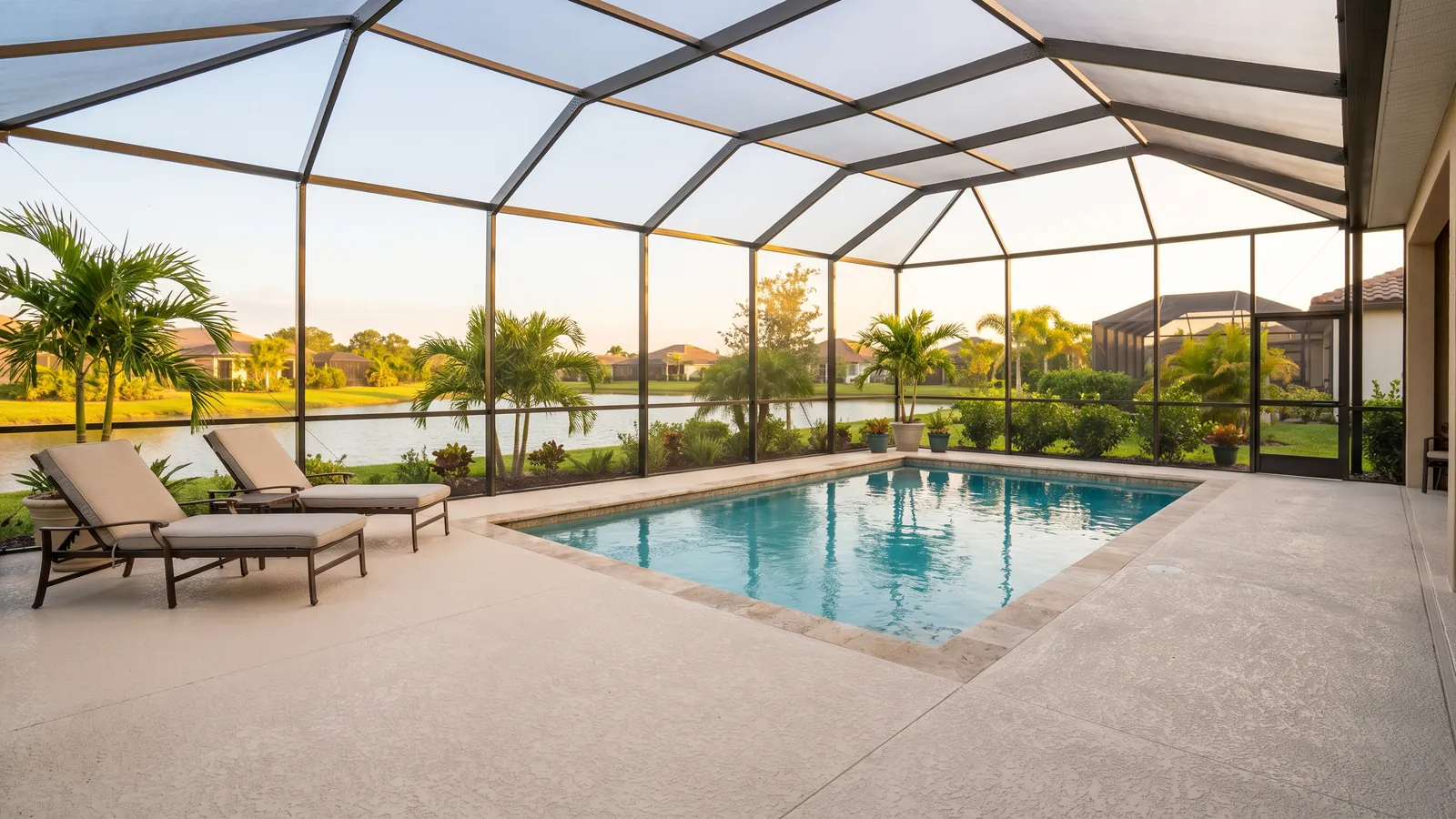
Pool decks
New textured decks inside the cage, cool-deck resurfacing, foam lifting of sunken sections and deck extensions for the grill.
Pool decks →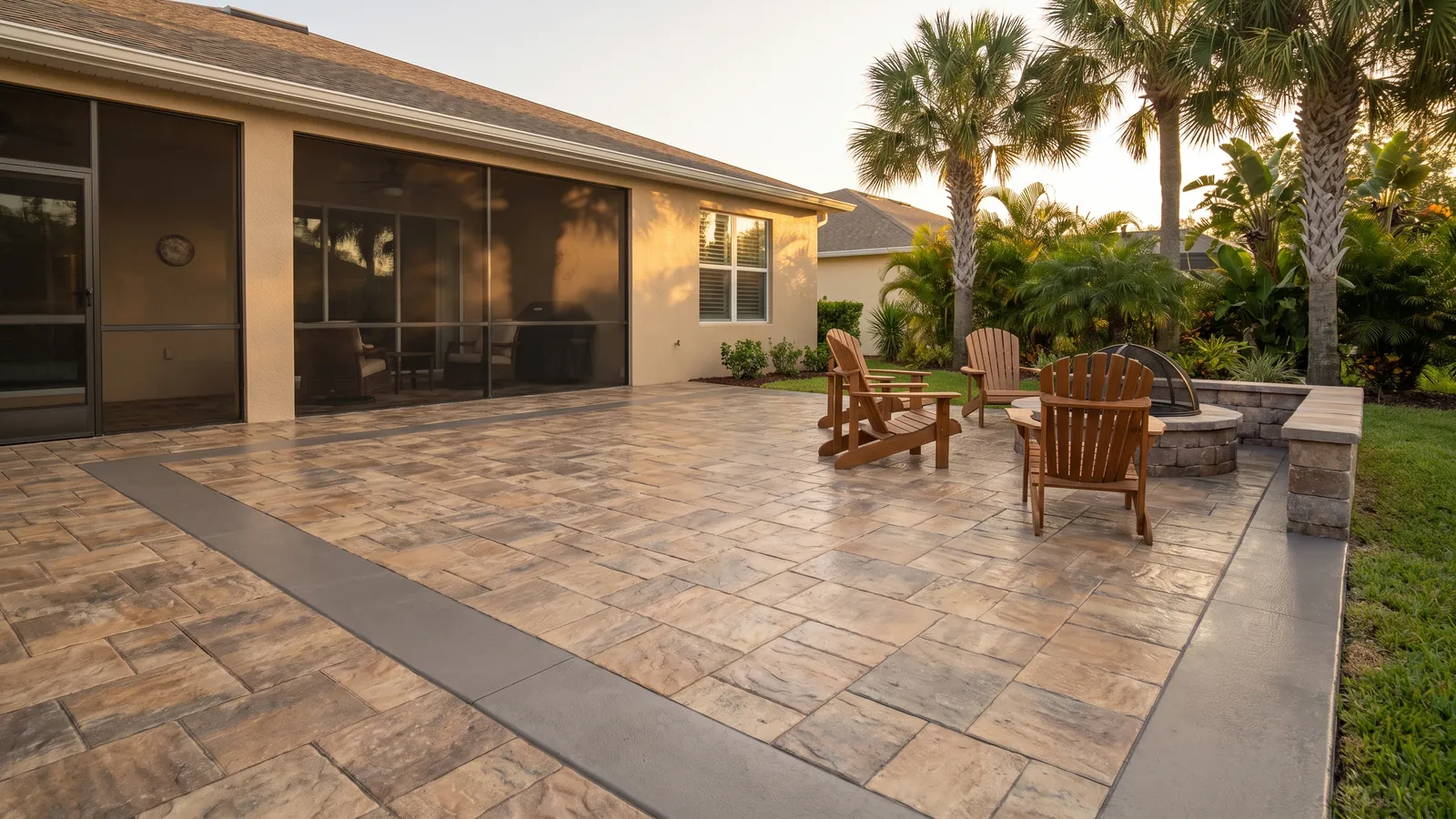
Stamped & decorative
Ashlar slate, flagstone, wood-plank and cobble patterns, integral color, borders and bands, sealed against the sun and the salt.
Stamped concrete →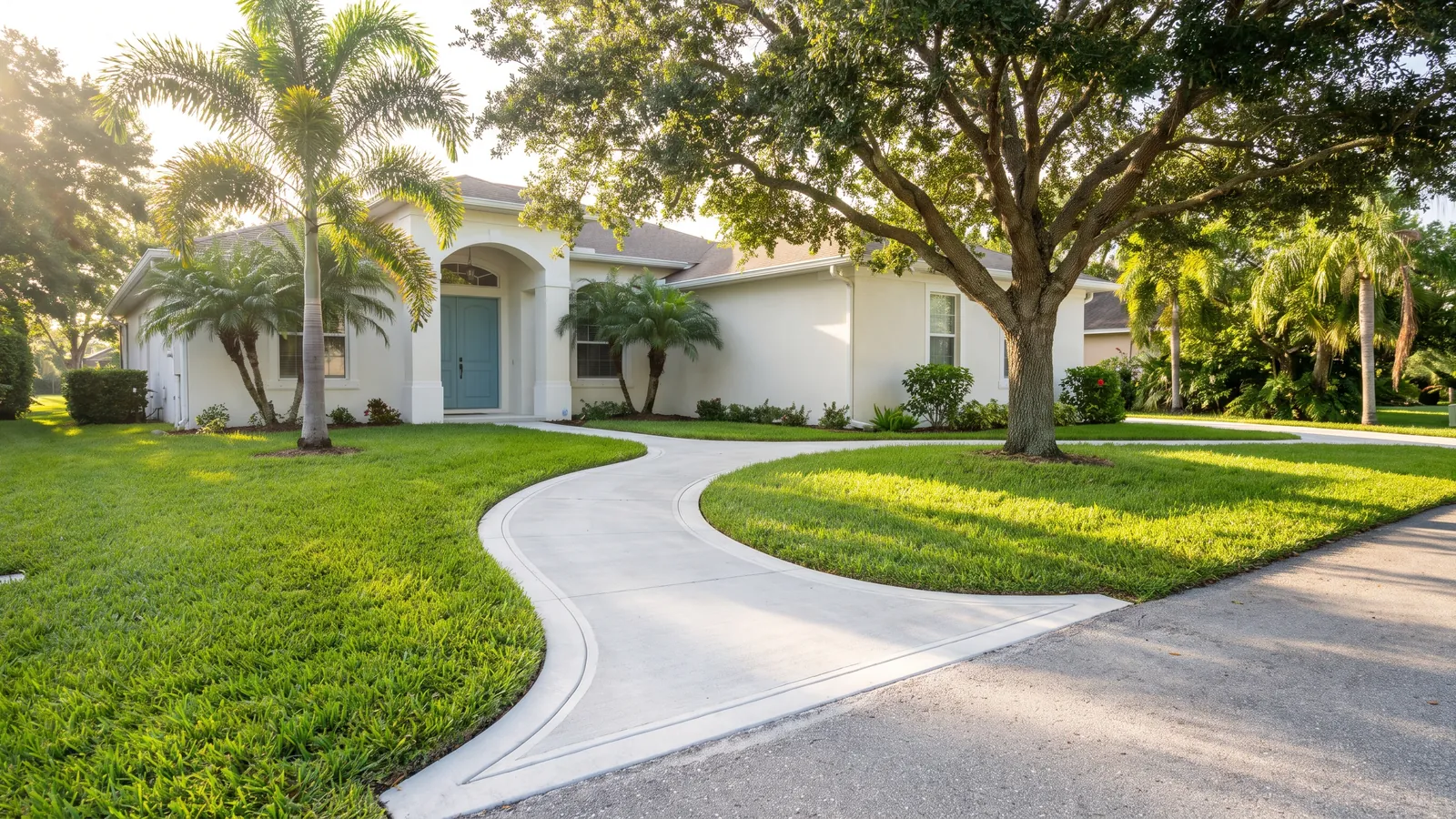
Walkways & sidewalks
Front walks, side-yard strips to the pool gate, landings and steps, and replacement of heaved city sidewalk panels under live oaks.
Walkways →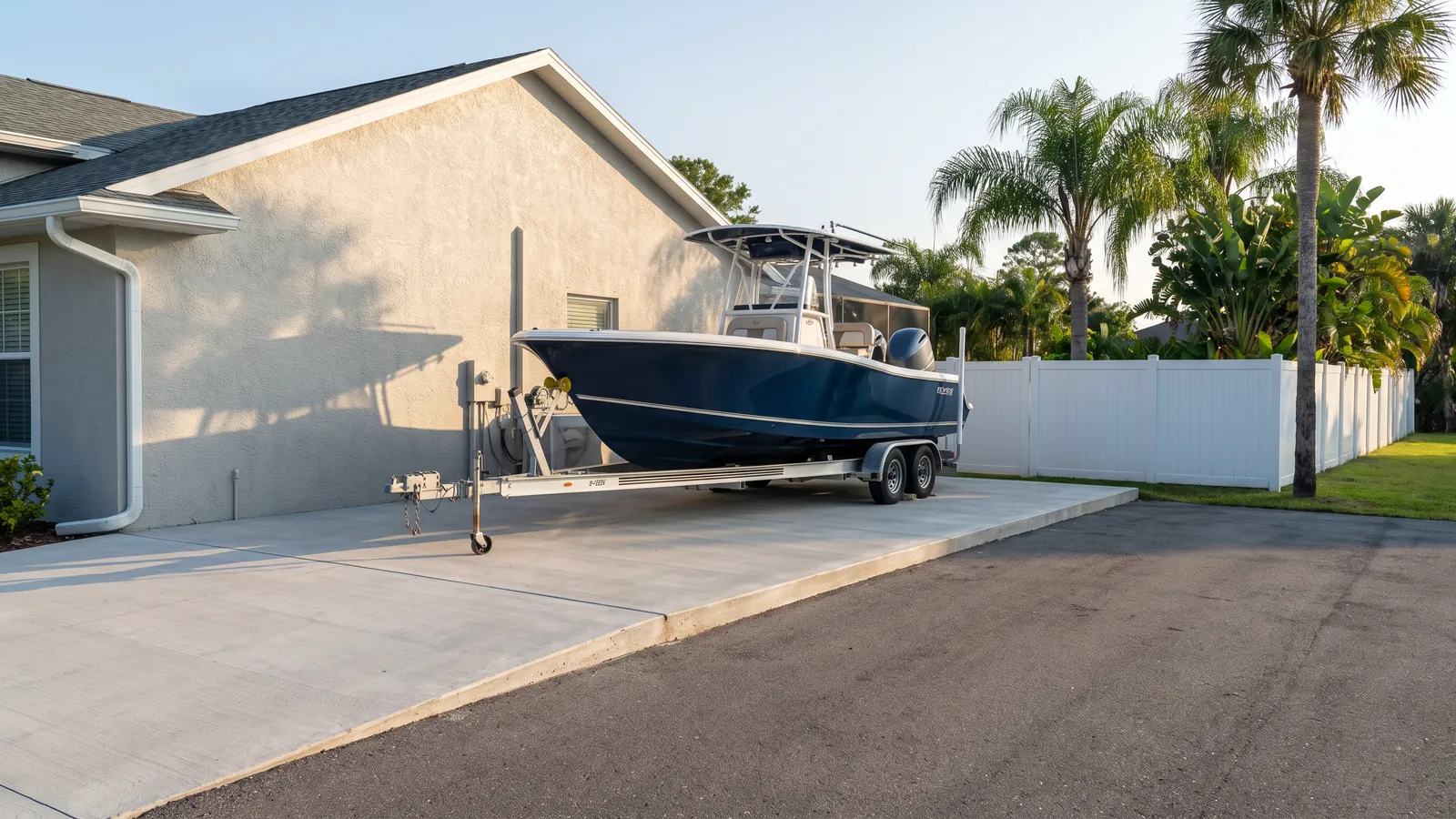
Shed, boat & generator pads
Reinforced pads for the shed, the boat, the RV, the whole-house generator and the AC — sized to the load and set above the wet-season grade.
Slabs & pads →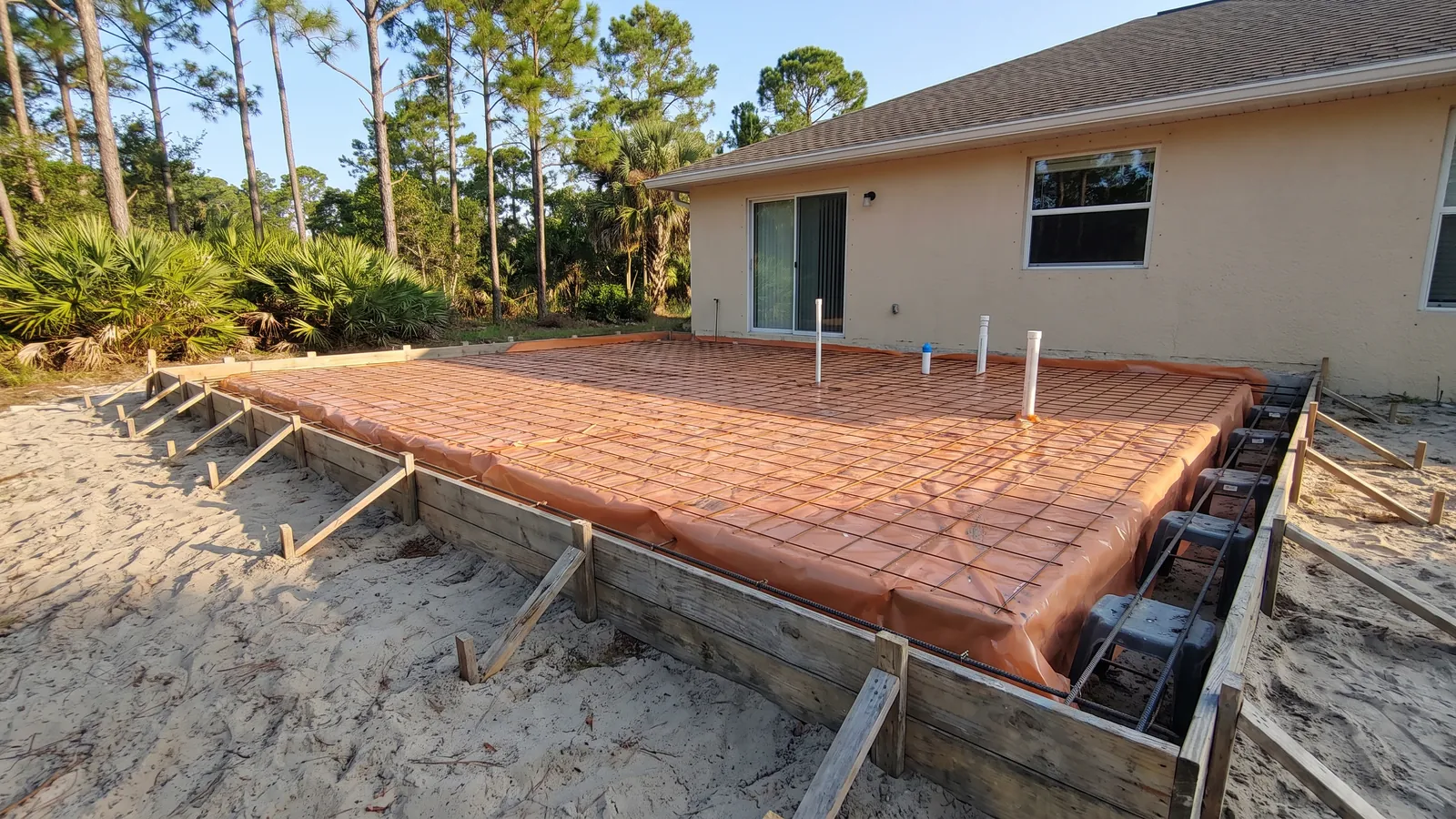
Foundations & additions
Monolithic slabs with thickened edges for additions, detached garages, workshops and ADUs — engineered, termite-treated, inspected.
Foundations →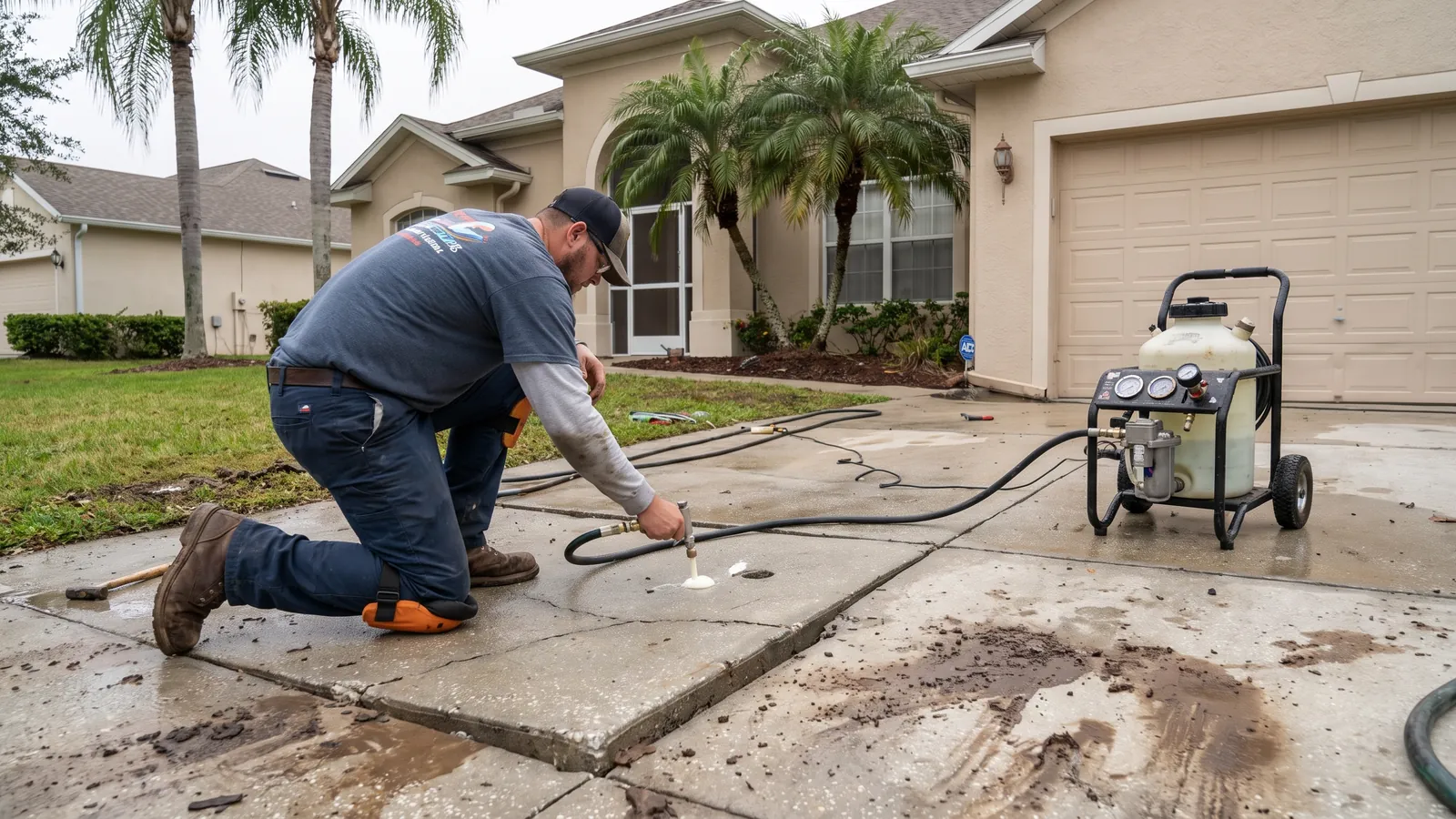
Repair, leveling & removal
Foam lifting of sunken panels, dowelled section replacement, crack sealing, spall repair and tear-out of slabs past saving.
Repairs →Three numbers that decide most Palm Coast concrete jobs
Palm Coast was laid out by ITT in 1969 as a grid of quarter-acre lots drained by roadside swales and 80-plus miles of canals. That drainage system is why slabs here fail the way they do — and why the city has rules about what you can pour near the street.
The code section that makes the swale yours
Under Palm Coast Municipal Code 24-159 the property owner maintains the swale and the driveway culvert on their frontage: culvert ends kept clear, erosion under the driveway repaired, no filling the swale, no pipes across property lines, no roof drains onto the driveway or right-of-way, and no edger along the driveway sides. A sunken apron almost always starts as a swale that stopped draining.
The line where the permit kicks in
An at-grade slab or patio under 120 square feet is generally exempt from a building permit in Palm Coast; a shed over 120 square feet, a structural slab, a pool deck, a new or widened driveway, and anything in the right-of-way needs one. The city processes most residential permits in 3 to 10 business days through its Permit Portal, and inspects the work. We pull it.
Where the water table sits
Most of the mainland is flatwoods sand — Myakka, EauGallie and Satellite sands — over a hardpan that holds water, with the water table anywhere from three to ten feet down depending on how close you are to the coast and the canals. Palm Coast averages 52 inches of rain a year and the city designs for a 7.8-inch 25-year storm. A slab poured on wet, uncompacted sand in a low corner of the lot is a slab that moves.
Four things that keep our phone ringing
Aprons washed out at the swale
A silted culvert or an eroded swale sends water under the apron, the sand goes with it, and the slab drops or cracks at the road. It's the most common call in the C, F, L and R sections, and it's a drainage fix and a concrete fix together.
Culverts & aprons →Sunken and heaved panels
Thirty years of a slab on uncompacted fill, a downspout dumping at the corner, or a live oak root lifting the walk — foam lifting fixes most of it in a morning for a fraction of a re-pour.
Leveling →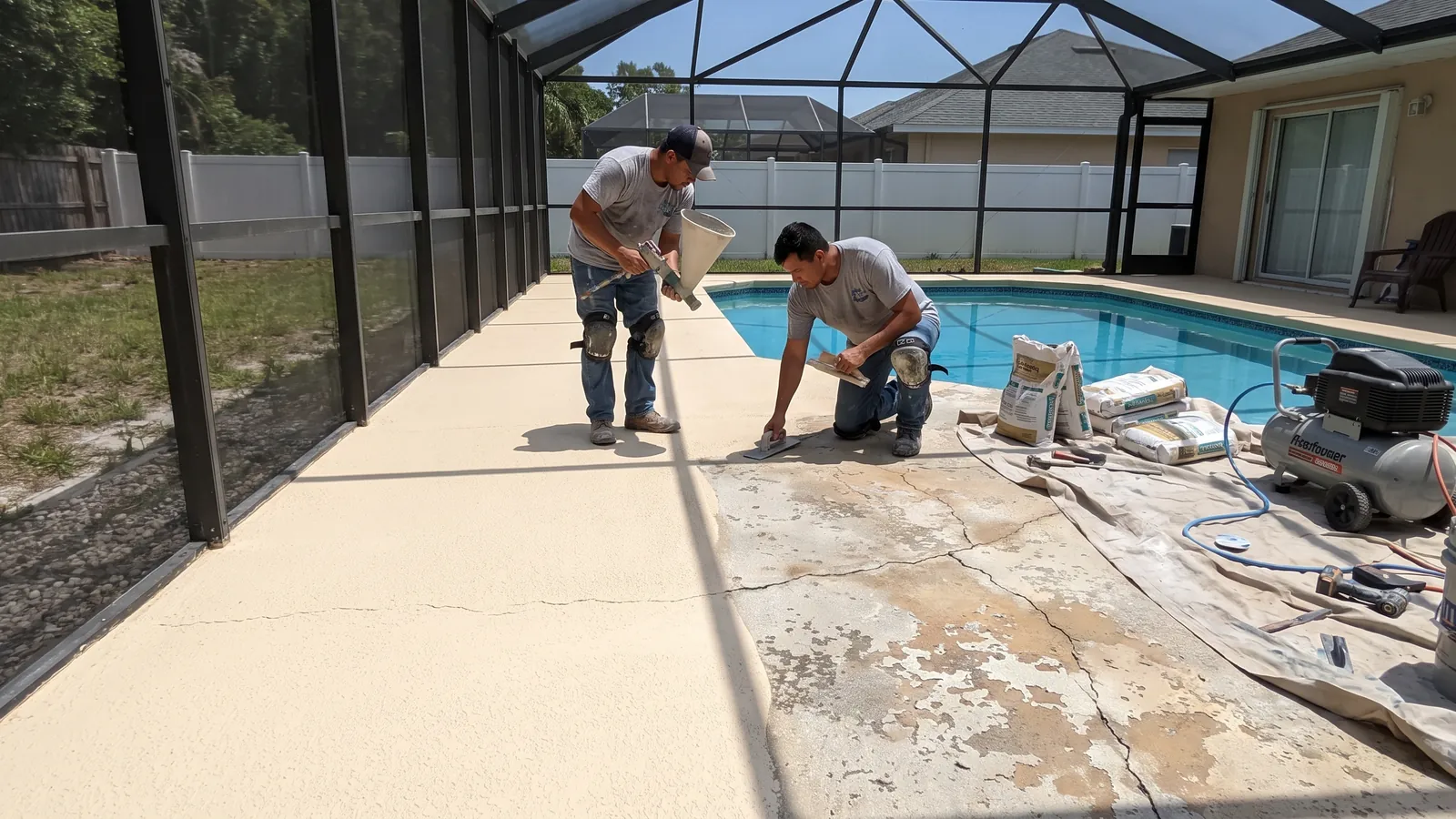
Pool decks past their finish
Cool deck that's chalking, hairline cracks, a deck pulling away from the coping, and paint someone rolled on in 2012 — resurfaced with a knockdown or spray texture that stays cool underfoot in August.
Pool decks →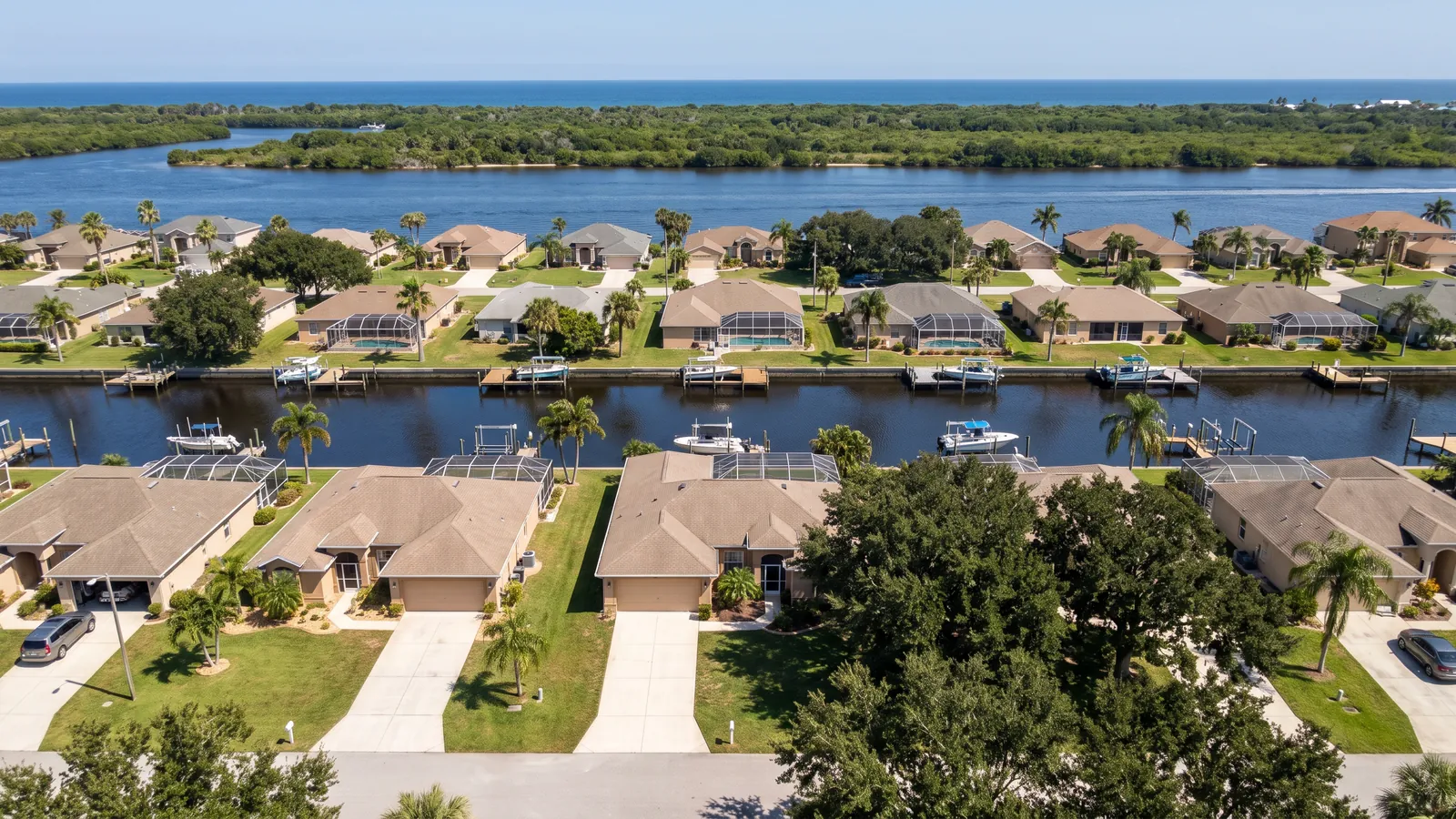
Salt-pitted concrete on A1A
The Hammock, Flagler Beach and Beverly Beach take salt spray year-round and storm surge every few years — Ian, Nicole and Milton. Rusting steel spalls the surface from underneath. Mix design, steel cover and sealing are what prevent it.
The Hammock →Palm Coast is a planned city on flatwoods sand, and concrete has to be built for it
ITT platted Palm Coast in 1969 as tens of thousands of quarter-acre lots on a grid of lettered sections — the B-section of Indian Trails, the C- and F-sections of Palm Harbor with their saltwater canals, the E-section of Cypress Knoll, the K, LL and Z sections of Quail Hollow, L-section Matanzas Woods, P-section Belle Terre and Pine Grove, R-section Lehigh Woods, the S and U sections of Seminole Woods, W-section Pine Lakes. The city that grew on that grid went from 89,258 people in the 2020 census to an estimated 110,330 by April 2025, and Flagler County passed 140,000 — one of the fastest-growing counties in Florida. Thousands of the original lots are still being built out, which means a lot of new driveways, a lot of new swale aprons, and a lot of contractors who've never seen a Palm Coast culvert detail.
The ground under all of it is the same: poorly drained flatwoods sand over a hardpan, a water table three to ten feet down, 52 inches of rain a year, and a stormwater system that runs through the swale in front of your house to a canal behind someone else's. Then there's the coast: the Hammock and Flagler Beach take salt spray and, every few years, a storm — Matthew in 2016 took out A1A in Flagler Beach, Ian and Nicole in 2022 flattened the dunes along all 18 miles of Flagler shoreline, and Milton in October 2024 dropped 12 to 16 inches of rain on Palm Coast in a week and did $19 million of private damage across the county.
So we do the unglamorous things right: compact the sand in lifts, keep the base above the wet-season grade, pitch every slab away from the house and toward the swale, pour the apron to the city's detail with real mitered ends, set control joints where the slab wants to crack anyway, use a tighter mix and proper steel cover on the island, and seal what we finish. And because we're here year-round, we're the crew that answers when the apron drops after the next storm.
Four steps from phone call to pour day
Call or send the form
A driveway, a lanai extension, a sunken apron, a shed pad — tell us what you're after and roughly how big. We answer around the clock.
Free on-site measurement
We measure, check where the water goes, look at the swale and the culvert, find out how a truck and a pump can reach the spot, and tell you whether the city or your HOA needs to sign off.
Itemized written price
Demolition and haul-off, base, thickness and steel, finish, joints, sealing, the permit — every line, good for 30 days. No deposit until you approve and we schedule.
Pour at first light, walk it with you
Forms and base inspected the day before, truck at sunrise to beat the heat and the afternoon storm, finish cured and sealed, forms pulled, yard raked — and we walk the finished slab with you before we leave.
From the canal homes of Palm Harbor to Seminole Woods, Grand Haven, the Hammock and every town within thirty miles
We're across Palm Coast every week: the 1970s and '80s canal homes of the C- and F-sections in Palm Harbor and the Woodlands; the golf-course streets of Pine Lakes and the newer builds of Indian Trails; the big lots of Seminole Woods, Quail Hollow and Cypress Knoll on the south side; Matanzas Woods and Lehigh Woods off Matanzas Woods Parkway and Belle Terre; Belle Terre and Pine Grove around the center of the city; the gated streets of Grand Haven on the Intracoastal; and the salt-air homes of the Hammock and Hammock Dunes on A1A.
Beyond the city we cover Flagler Beach and Beverly Beach, Bunnell, Plantation Bay and Halifax Plantation, Ormond Beach, Daytona Beach and Holly Hill, and the south side of St. Augustine down through St. Augustine Shores — every town of 10,000 or more within about thirty miles.
See the full service area →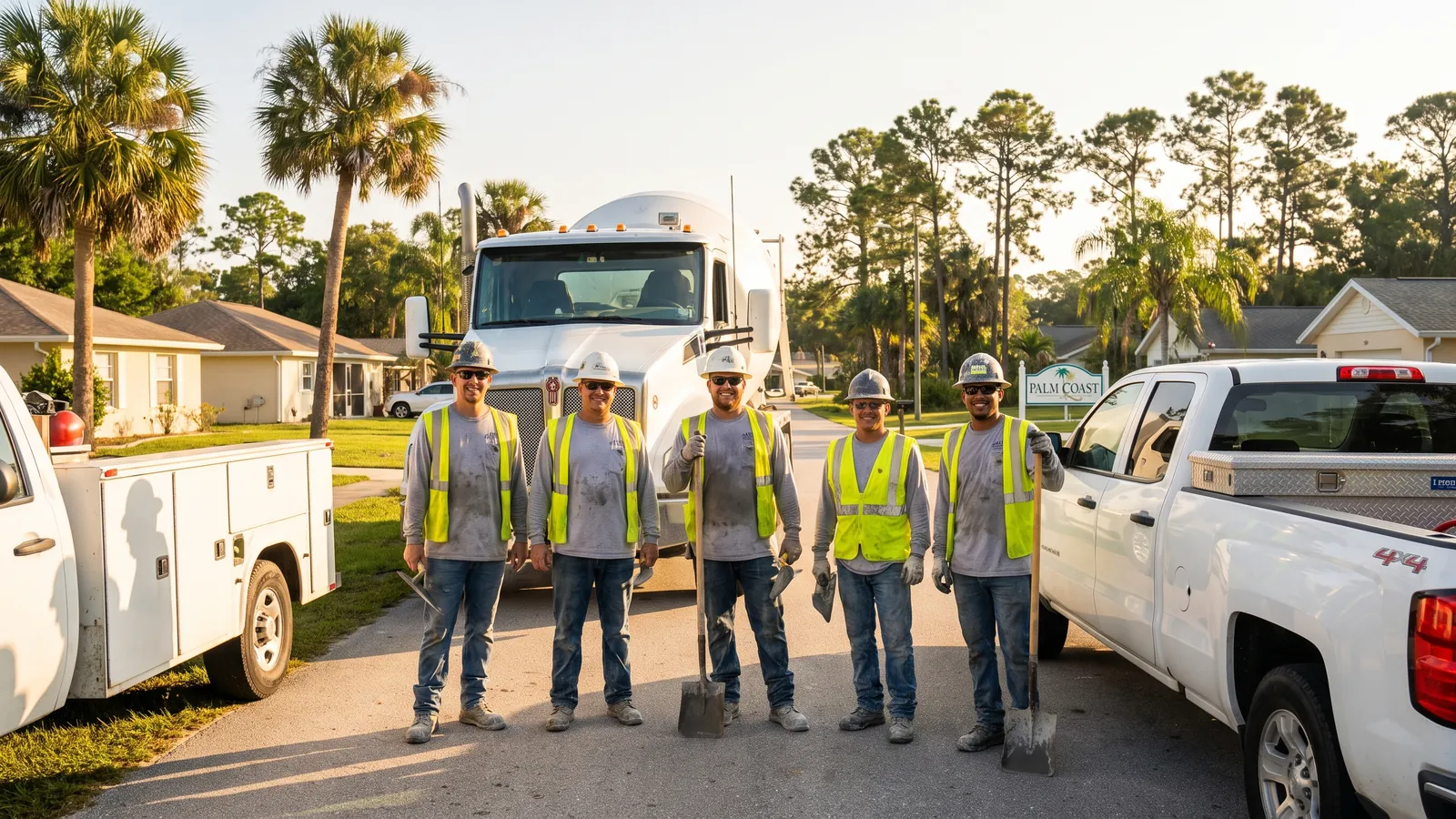
Questions Palm Coast homeowners ask us
How much does a concrete driveway cost in Palm Coast?
For a typical two-car driveway of 500–650 square feet, a new 4-inch broom-finished slab with fiber and wire reinforcement runs about $5,000–$8,500 in 2026, and a full replacement — cutting out the old slab, hauling it, recompacting the sand base and pouring new — $6,500–$11,000. A new apron across the roadside swale with a culvert pipe and poured mitered ends adds roughly $2,500–$5,500 and needs a city permit. Stamped or colored work, a thicker boat-side extension, a long run to the street and a lot that sits low all move the number, and you get every line of it in writing before a truck is ordered.
Do I need a permit for a driveway in Palm Coast?
For a new driveway, a widened one, or anything that touches the roadside swale or the right-of-way — an apron, a culvert, a second access — yes. The City of Palm Coast issues a separate driveway permit through its online Permit Portal and inspects the work, and every contractor on it has to be registered with the city's Building Services Division. Replacing an existing driveway in the same footprint is generally exempt, and an at-grade patio slab under 120 square feet usually is too, but we confirm with Building Services at (386) 986-3780 before every job rather than guess. We pull the permit and it's on the invoice.
Why do driveways here sink at the street?
Because of the swale. Palm Coast's original ITT layout drains every street through grassy roadside swales that carry water to the canal network, and the driveway apron crosses that swale on a culvert pipe. When the pipe ends silt up or the swale erodes, water runs under the apron, washes the sand out from beneath it, and the slab drops or breaks at the road. Under Municipal Code 24-159 the property owner maintains the swale and culvert on their frontage, so a sunken apron is usually a drainage fix and a concrete fix together — we do both.
How thick should a slab be in Florida sand?
Four inches of 3,000 psi concrete over compacted sand is the standard for a driveway, patio or shed slab that carries cars and foot traffic; five to six inches with rebar for a boat pad, an RV pad, a generator pad or the apron at the road, where the wheel loads concentrate. The thickness matters less than what's under it: sand that's been compacted in lifts, a base that's above the wet-season water table, and edges that aren't going to get washed out by a swale or a downspout. That's where Palm Coast slabs fail, and it's what we spend our time on.
Does concrete near the beach need anything special?
On the barrier island — the Hammock, Hammock Dunes, Flagler Beach, Beverly Beach — salt air and storm-driven spray attack the steel inside a slab and pit the surface over the years. We use a lower water-to-cement ratio, keep the reinforcing steel at proper cover so salt can't reach it as fast, and seal the finished surface with a penetrating sealer. It doesn't change the price much, and it's the difference between a driveway that looks like coquina in ten years and one that doesn't.
Do you really answer at night?
24 hours a day, every day. A driveway isn't usually an emergency, but a slab that dropped under a car, a pool deck that's separating from the coping, or a swale apron that washed out in a storm gets a same-day look when we can, and a person picks up the phone when you call.