Shed, boat, RV and generator pads in Palm Coast, sized to the load and set above the wet season
A pad for the shed the HOA approved, a reinforced pad for the boat that's been killing the side yard, a level pad for the whole-house generator, or a slab for the AC and the pool pump — thick enough for what sits on it, high enough to stay dry.
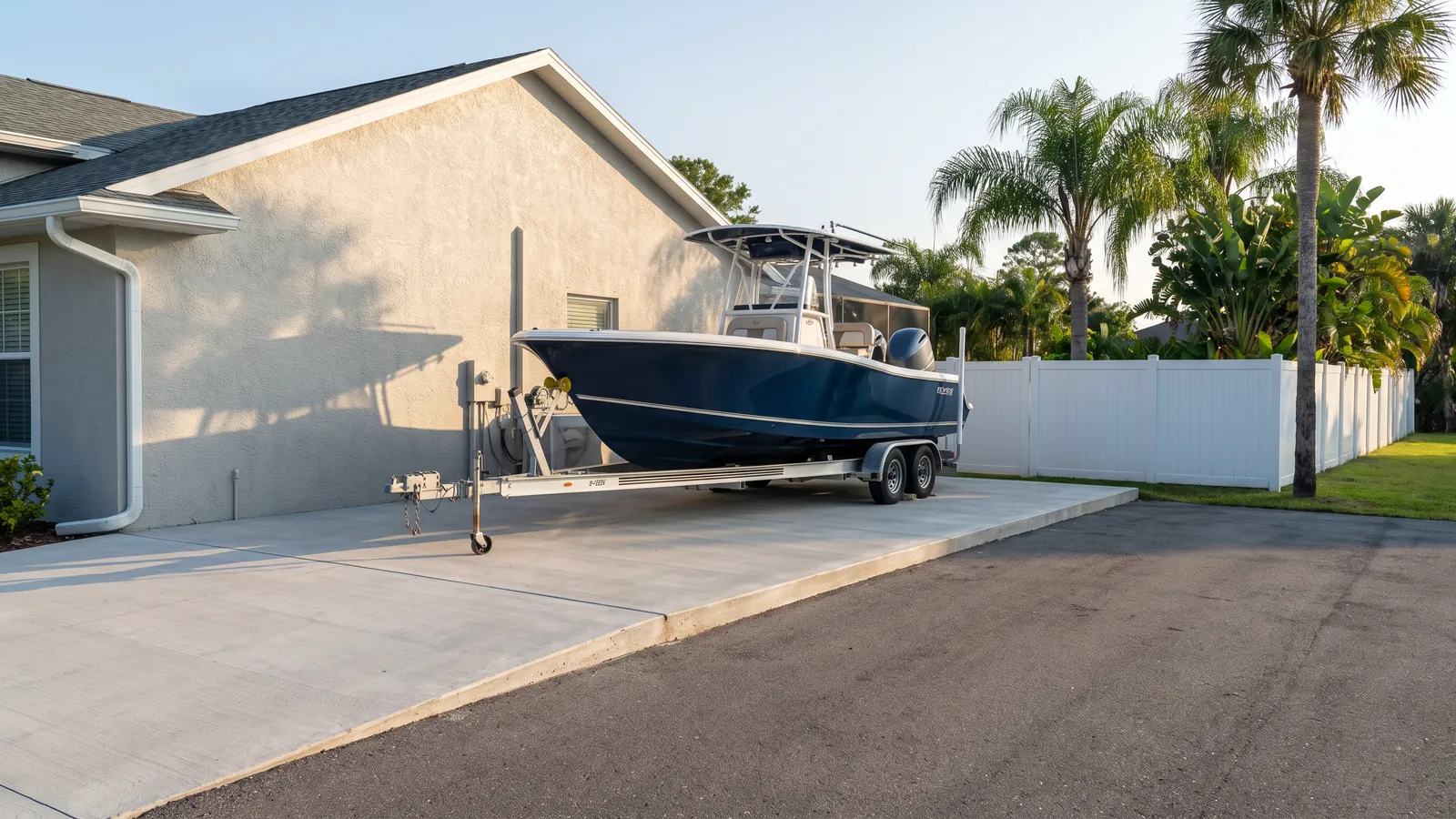
The side yard of a Palm Coast lot is where the boat, the trailer, the generator and the shed live, and it's usually the lowest, wettest, least-compacted ground on the property. A pad poured on it at four inches with no fill sits in water every summer and cracks under the first tongue jack. We bring in clean sand where the ground is low, compact it in lifts, set the slab an inch or two above the surrounding grade so it sheds instead of ponding, and pour to the load: four inches with fiber and wire for a shed, a pump house or an AC pad; five to six inches with rebar for a boat, an RV or a whole-house generator, with a thickened edge under the trailer tongue and the generator's mounting rails.
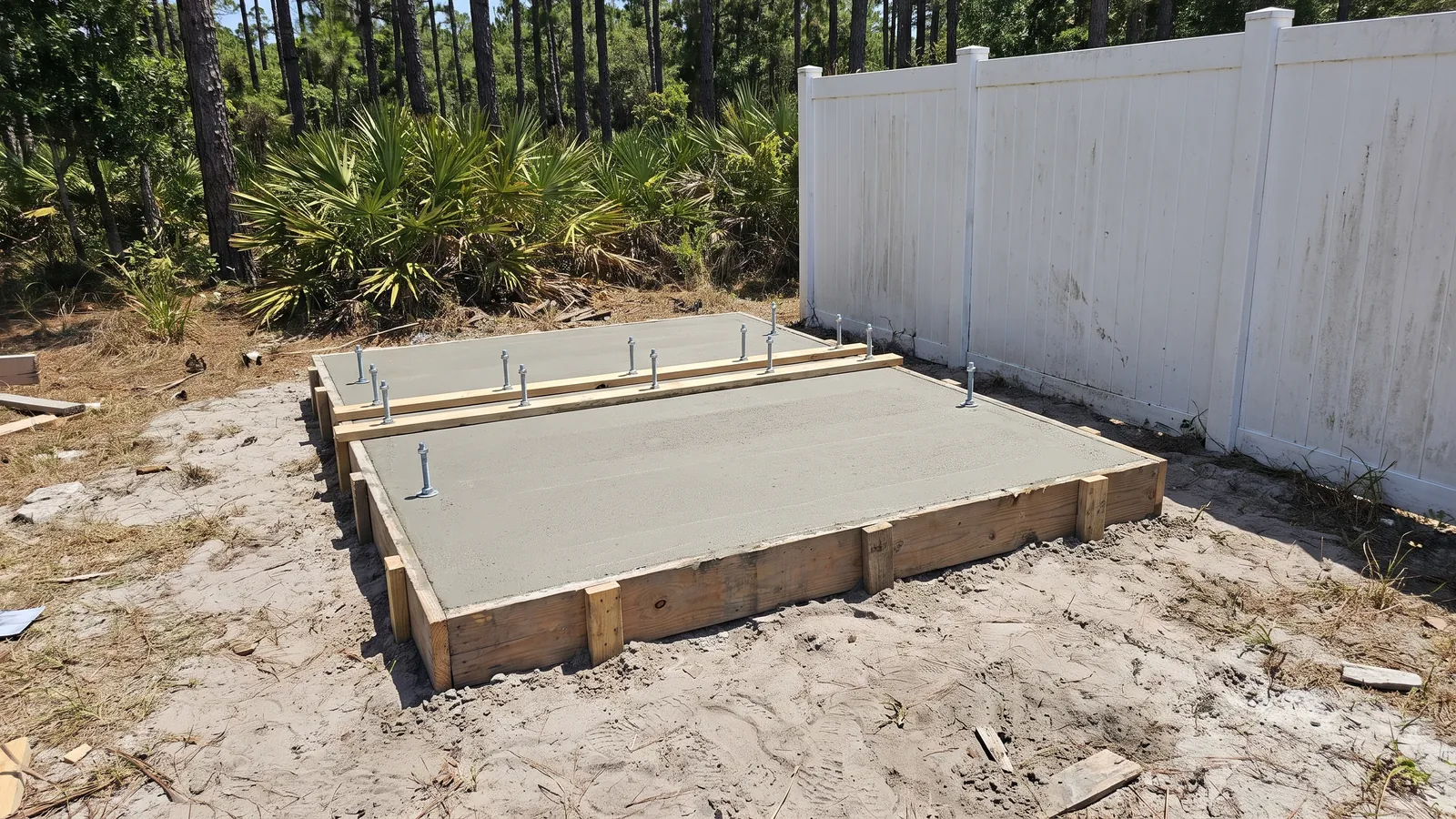
Two of these come with paperwork. Sheds over 120 square feet need a building permit in Palm Coast, and most shed manufacturers want anchor bolts set in the slab to their template so the shed meets Florida's wind-load rules — we set them to the drawing. Whole-house generators are the fastest-growing pad request since Milton in October 2024 left parts of the county dark for days; the installer supplies a pad spec (thickness, size, clearance from the house and the meter, conduit stub-ups), the pad is part of the electrical and gas permit, and we pour it to the letter so the inspection passes the first time. Boat pads in the associations — Grand Haven, Plantation Bay, the Hammock — need the architectural committee's sign-off and usually a screening rule; we tell you before you commit.
What's included
Fill and compaction where the lot sits low
Clean sand brought in and compacted in lifts so the pad sits above the wet-season grade, not in it.
Thickness to the load
Four inches with fiber and wire for sheds, AC and pump pads; five to six inches with rebar under boats, RVs and generators.
Anchor bolts to the template
Set to the shed manufacturer's drawing so the shed anchors meet Florida wind-load requirements; sleeves and stub-ups for the generator.
Generator pads to the installer's spec
Size, thickness, clearances and conduit locations exactly as the electrician's drawing shows, ready for the inspection.
Thickened edges
Under the trailer tongue, the generator rails and any block wall, so the load doesn't sit on a four-inch edge.
HOA & permit
The city permit for sheds over 120 square feet and structural pads; architectural review for the associations that require it.
Slabs & pads cost in Palm Coast, FL
| Job | Typical price | Notes |
|---|---|---|
| Shed slab, 10×12 to 12×16, 4" reinforced | $1,500 – $2,800 | Anchor bolts set to template |
| Boat / RV pad, 12×35 to 14×45, 5–6" reinforced | $4,000 – $7,500 | Side-yard access |
| Whole-house generator pad, 4×8 to 5×10, 6" | $700 – $1,300 | To the installer's spec |
| AC / pool-equipment pad | $380 – $750 | Often added to another pour |
| Pump-house or well slab | $650 – $1,300 | Above wet-season grade |
| Detached workshop or garage slab | See foundations | Engineered, permitted |
| Fill and compaction where the lot sits low | $450 – $1,900 | Itemized by the load |
These are 2026 Flagler County ranges so you can budget. Your written price is itemized — demolition and haul-off, base, thickness and steel, finish, joints, sealing, permit — and good for 30 days.
Recent work
Questions we get about slabs & pads
Do I need a permit for a shed slab in Palm Coast?
The shed itself needs a permit if it's over 120 square feet, and the slab is inspected as part of it; under 120 square feet the slab is generally exempt, though the shed still has to meet the setback rules. Boat and RV pads on the lot don't usually need a building permit, but they do need the HOA's approval where one exists and can't extend into the swale or right-of-way.
How thick does a boat pad need to be?
Five inches with rebar for a bay boat or a center console on a tandem trailer; six inches for anything bigger, a travel trailer or a motorhome, with a thickened edge under the tongue jack. Four inches with wire is fine for a jet ski trailer and not for much else.
What does the generator installer need from the pad?
A level pad of the size and thickness on their drawing — usually four by eight to five by ten feet and six inches thick — set the required distance from the house and the meter, with conduit stub-ups where the drawing shows them. Most installers want the pad poured and cured before they deliver the unit, so we schedule ten days ahead of the set date.
My side yard floods every summer. Can you still pour there?
Yes, by bringing the pad up. We add compacted sand to raise the base above the standing-water line, pitch the pad to shed, and make sure the water you displace still drains toward the swale rather than into your neighbor's yard — which is also what the city expects.
Can you tie the pad into the driveway?
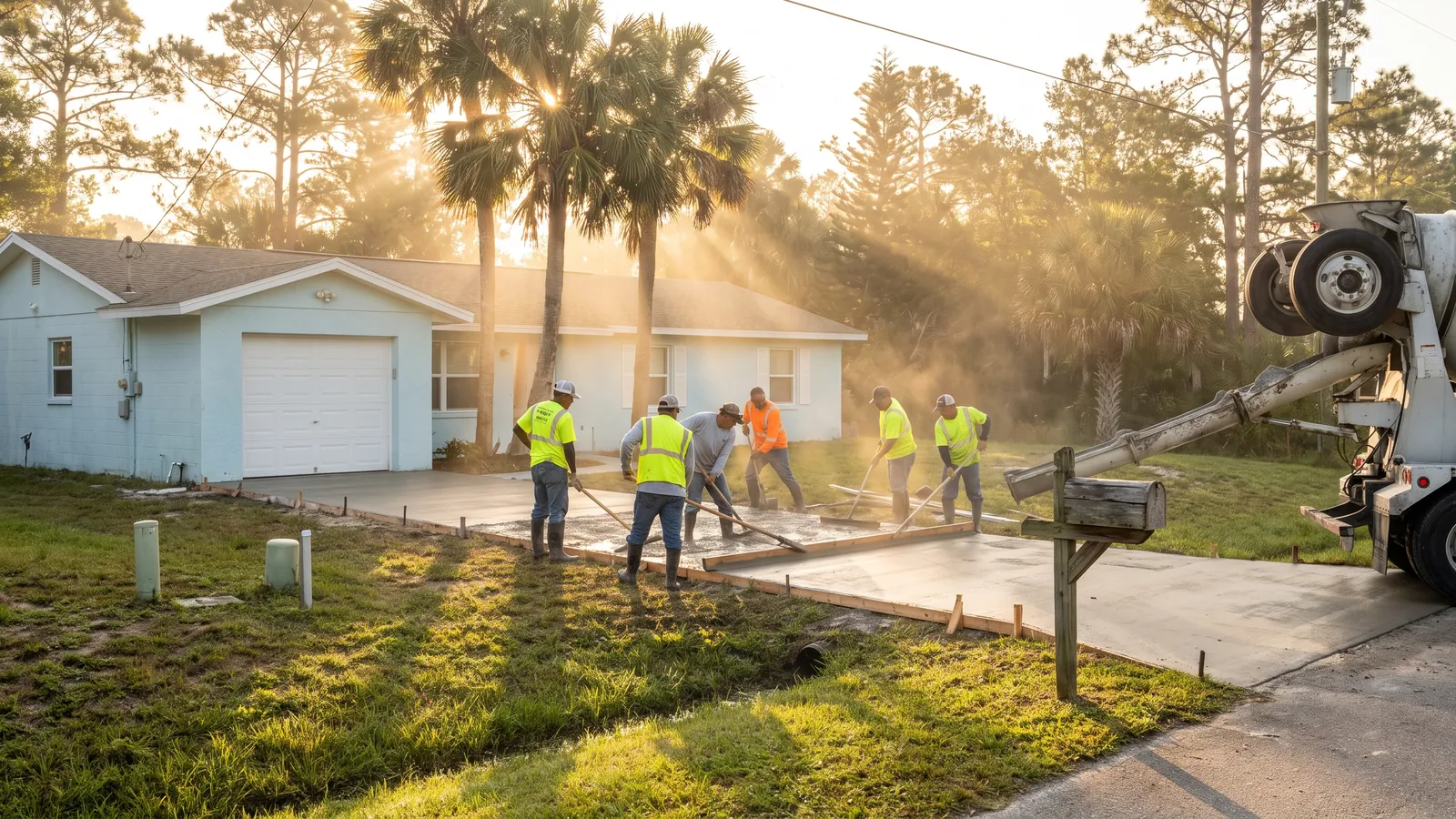
Yes. A boat-side extension that runs from the driveway back to a pad behind the fence line is one of our most common jobs; the extension is poured thicker than the driveway and joined with an expansion joint. See the driveway page for widening rules at the street.